The MyBid blog is your expert guide to conversion traffic.
We share real-world case studies, insider tips, and practical guides for our
ad network. Learn how to master these tough verticals and run profitable
campaigns with our tools. No theory, just actionable advice to boost your profit.
The performance advertising market grew to $17 billion in 2026 — and push/pop formats are still at its core. But the rules of the game have changed.
What worked in 2024 now gives lower ROI. We have gathered seven main trends: in‑page push is replacing classic push, AI bid optimization has become standard, Telegram Mini Apps are opening a new channel, budgets are shifting to Tier 2–3, creatives need personalization, automated rules save time, and the web push market is stabilizing. In this article, we will tell you what actually brings profit in 2026-2027 and how to adapt.
Register with the MyBid advertising network today! Get access to 6 popular formats (Popunder, Push, In-Page Push, Telegram Mini Ads, Banner, Video), millions of global clicks, fast moderation, and personal manager support. Join MyBid and run your campaigns in the black.
Push and pop in 2026: key market numbers
The affiliate marketing market continues to grow, although at a more moderate pace than before. According to Statista forecasts, the global web push advertising market will be about $3.22 billion in 2026, and by 2030 it will reach $3.61 billion. The average annual growth rate (CAGR) is about 2.88%. The market is moving from a phase of rapid growth to a mature stage where traffic quality matters more than volume.
The share of push and pop in total affiliate traffic remains high, especially in the iGaming, sweepstakes, and utilities verticals. At the same time, there is a clear shift: budgets are moving from overheated Tier 1 to Tier 2–3, where CPM is lower and impression volumes are growing at double‑digit rates.
Trend 1 — In‑page push is replacing classic push
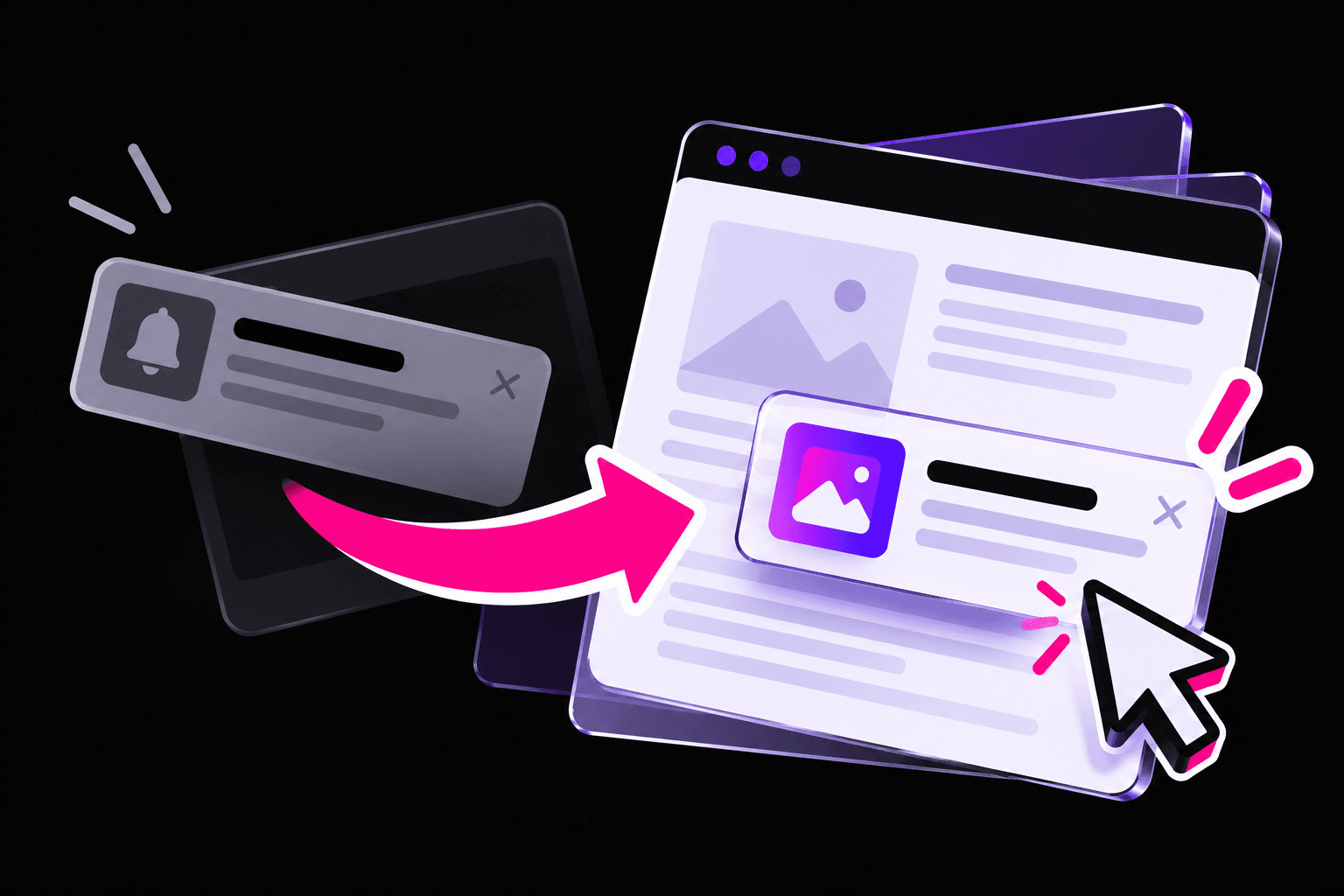
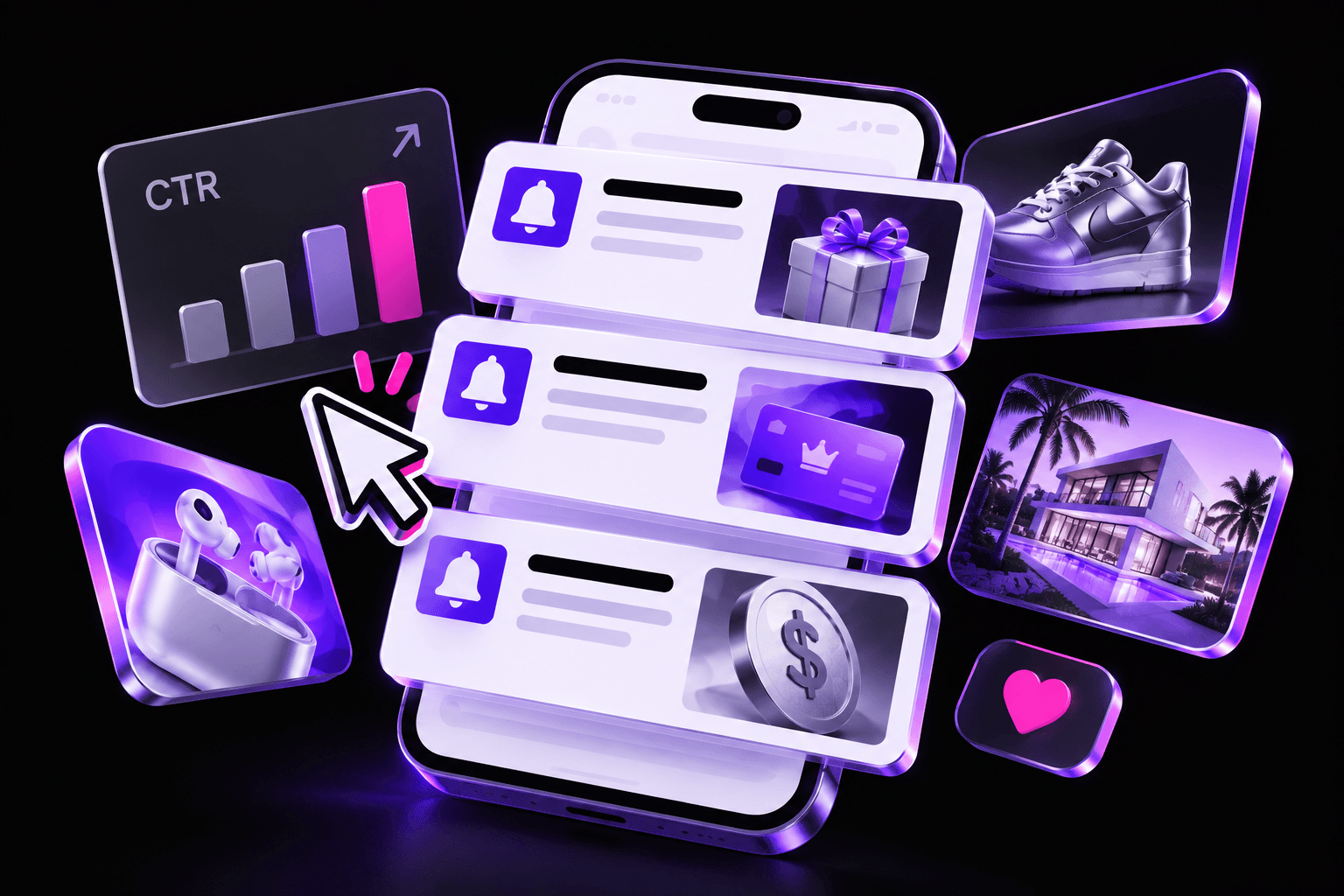
What is in‑page push? It is a small notification that appears in the corner of a web page while browsing. It looks like a classic push but does not require a subscription — the user does not need to click "Allow". The format combines features of push and pop‑ups, but without the aggressiveness of the latter.
Why is in‑page push growing? Chrome and Safari have tightened their policies on push subscriptions. Google has strengthened control through Safe Browsing, and the unsubscribe button on Android has become more noticeable. This has led to a loss of subscribers and a decrease in classic push traffic volumes. In‑page push bypasses these limitations because it does not depend on a browser subscription. It works on all devices, including iOS, and is not affected by browser updates.
CTR comparison: classic push gives an average of 1–5% depending on geo and creative. In‑page push, according to some networks, shows higher CTR because the user is active on the page and not distracted by outside notifications.
When in‑page push works better:
For iOS audiences (classic push does not work there).
On content sites (blogs, news portals).
When testing new creatives without waiting to build a subscriber base.
In MyBid, you can run in‑page push as a separate format with the same targeting settings as for classic push.
Trend 2 — AI bid optimization has become standard
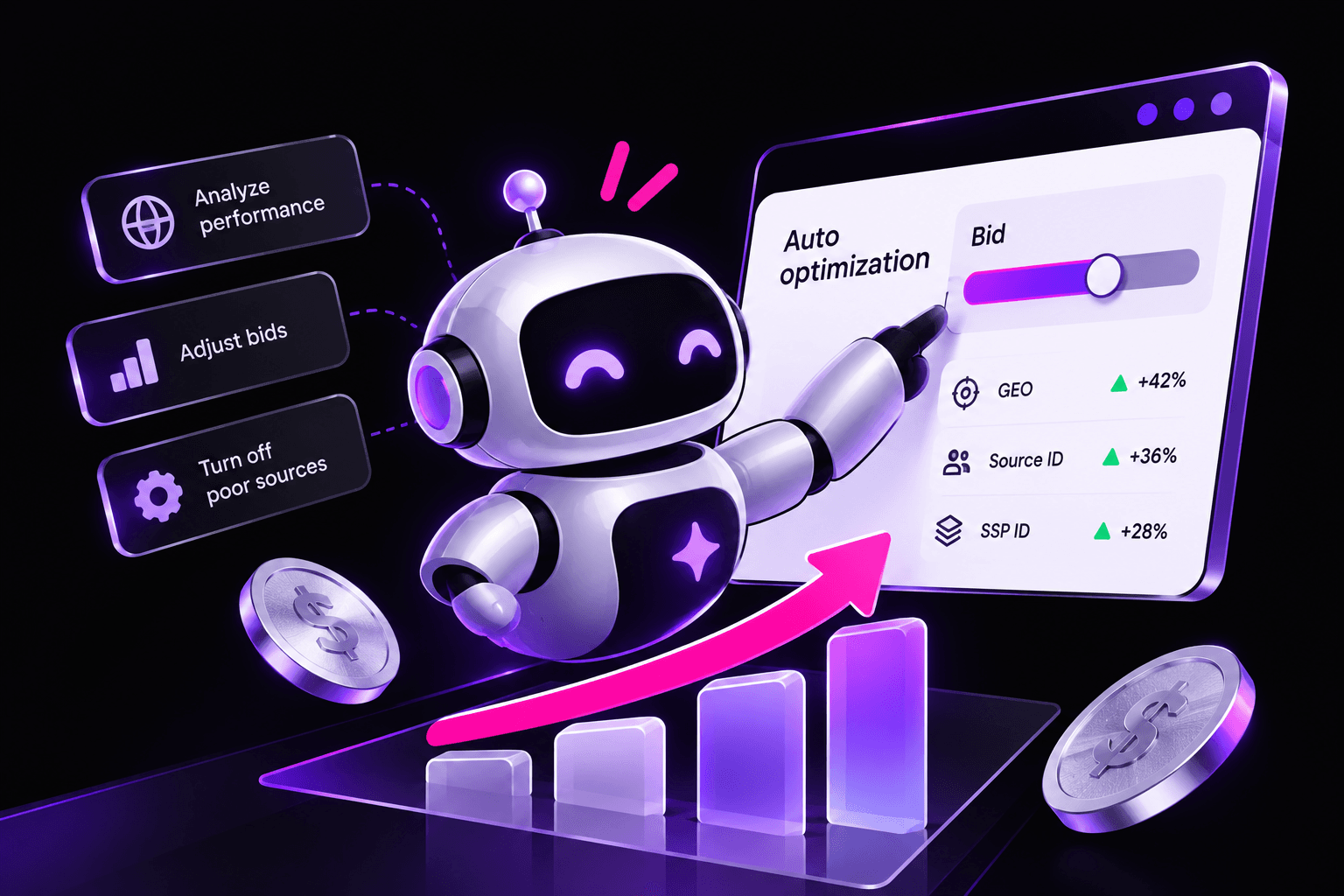
Manual bid optimization is a thing of the past. In 2026, algorithmic models manage campaigns in real time. AI analyzes hundreds of input parameters — time of day, device type, behavioral signals — and instantly adjusts bids.
What has changed. Before, you would manually look at statistics, find losing sources, and lower bids. That took hours. Now AI does it in seconds. Systems like SmartCPC and CPA Goal automatically redistribute budget to segments with better conversion and lower bids on unprofitable sites.
How CPA Goal works in MyBid. You set a target cost per action (for example, $2 per lead). The algorithm tests different sources, bids, and creatives. If a segment gives conversions more expensive than your target, the system automatically lowers the bid on it or turns it off. Everything happens in real time, without your involvement.
Data. According to eMarketer estimates, AI optimization reduces conversion cost by 20–40% compared to manual management. Agentic AI systems, which will appear in the coming years, will reduce auction delays by up to 80%.
Recommendation. Start with manual control on your first tests (to understand the mechanics), but as soon as you have data, turn on AI optimization. In MyBid, this feature is built into the basic campaign settings.
Trend 3 — Telegram Mini App as a new advertising channel
Telegram Mini App (TMA) is a full‑fledged application inside the messenger. It runs without installation, supports payments and interactive elements. In 2026, TMA is becoming an independent advertising channel.
What formats are available. Inside a TMA, you can place banners, in‑page notifications, and video. The user sees the ad without leaving the app. The context is high — the person is already playing, filling out a form, or reading content.
Why you should test it in 2026. Telegram has more than 900 million active users. The audience is young, has purchasing power, and is used to digital services. Competition is still low — many affiliate marketers have not yet mastered this channel.
Recommended verticals for TMA:
Gambling and betting (fast registrations, bonuses).
Dating (profiles, chats inside the app).
Finance and crypto (rate alerts, registration bonuses).
Sweepstakes (giveaways and quizzes directly in the TMA).
How to launch in MyBid. In the dashboard, select the Telegram Mini App format, enter the link to your app, set targeting by geo, device, and language. AI algorithms optimize the impressions.
Trend 4 — Budget shift to Tier 2–3 geos
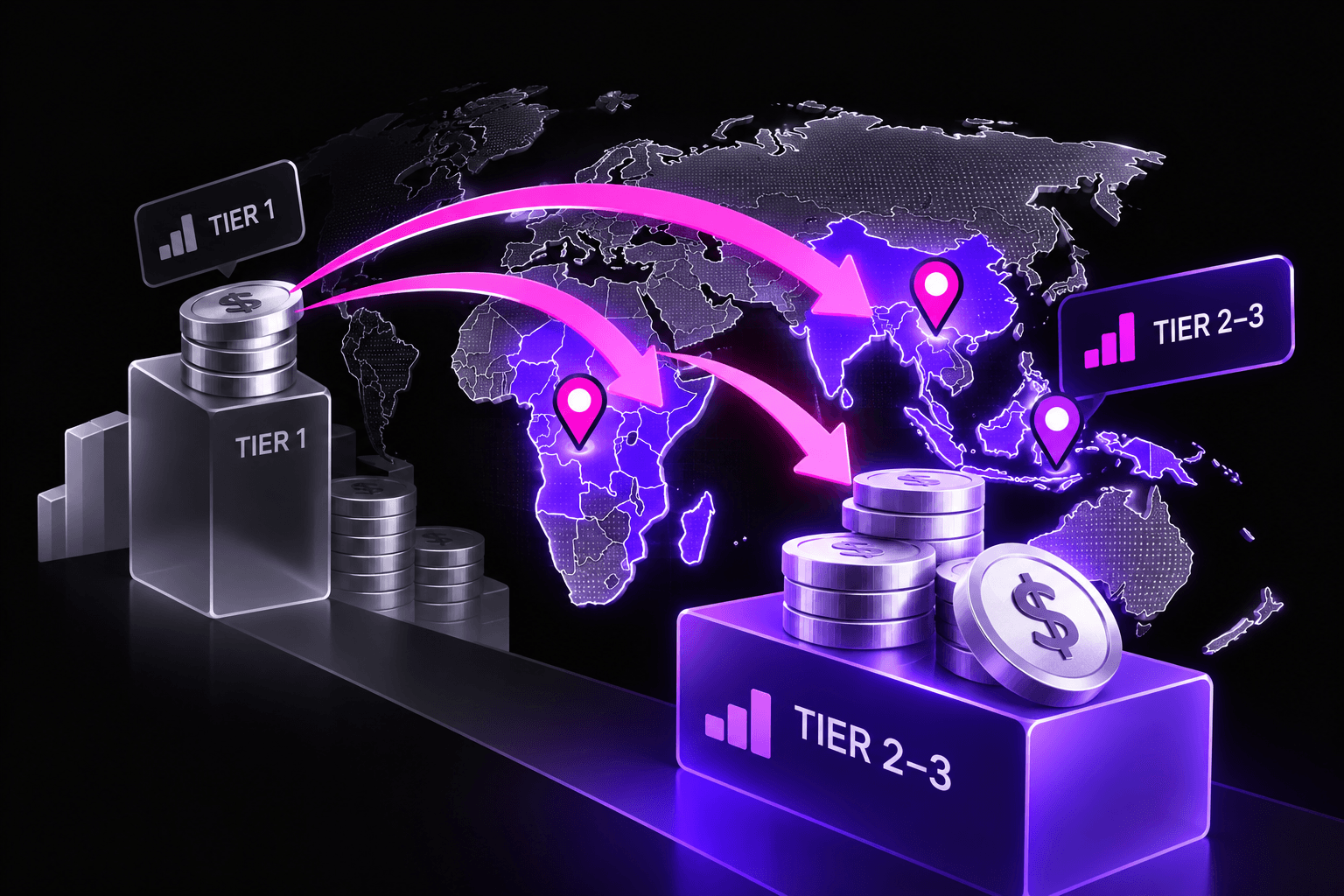
Tier 1 (USA, UK, Germany, Australia) no longer guarantees high ROI. Competition has grown to the limit, CPM has skyrocketed, and the paying audience is oversaturated with ads. Many affiliate marketers are moving to Tier 2 and Tier 3 — where it is cheaper and there are more free volumes.
Why Tier 1 is overrated. Rising CPC/CPA rates with falling conversion. Large brands and agencies are pushing out smaller players. Browser restrictions and privacy requirements are higher than in other regions.
Tier 2–3 are growing. LatAm (Brazil, Mexico, Argentina), Asia‑Pacific (Thailand, Vietnam, Philippines, Indonesia), MENA (Egypt, UAE), Africa (Nigeria, Kenya, South Africa) — traffic volumes there are increasing at double‑digit rates. The cost per click in Tier 3 can be 3–10 times lower than in the US, with conversion rates of 2–5%, allowing you to turn a profit even on small budgets.
Table: Comparison of Tier 1, 2, and 3 by key metrics
Tier
Average CPM ($)
Average CR (%)
Traffic growth 2025→2026
Best verticals
Tier 1 (US, UK, DE, AU)
2.00–5.00
1–3%
+5–10%
Finance, antivirus, dating
Tier 2 (LatAm, SEA, MENA)
0.50–1.50
2–5%
+15–25%
Gambling, sweepstakes, utilities
Tier 3 (Africa, Central Asia)
0.20–0.80
2–5%
+25–40%
Gambling, betting, mobile content
Specific countries with high potential in 2026:
Brazil, Mexico (Tier 2) — huge mobile traffic, high activity in iGaming.
Indonesia (Tier 2–3) — one of the largest markets for push and pop in Asia.
Nigeria, Kenya (Tier 3) — internet penetration is growing, mobile money (M‑Pesa, OPay) enables fast payments.
Trend 5 — Push creatives: what works in 2026
Creatives in push advertising have become personalized. Instead of mass mailings with the same message — adaptation to the user.
What has changed in approaches:
Emotional headlines ("You won", "Account will be deleted") work better than informational ones ("New articles on the site").
Personalization (name, city, device in the text) increases CTR by 20–40%.
The icon affects clickability more than the main text. A logo or recognizable symbol gives up to +40% CTR compared to a standard icon.
Short headlines (up to 36 characters) and short texts (up to 75 characters) are the 2026 standard. No one reads long messages.
Tips for A/B testing:
Test at least 3–5 creative versions in one campaign.
Change one element at a time: headline, text, icon.
Let each version get at least 1,000 impressions before drawing conclusions.
Turn off clearly losing versions, keep the best 2–3 for scaling.
Example from MyBid practice: a dating campaign in the US with three headline variants ("Who is near you", "New message", "+200 profile views") showed a CTR difference from 1.2% to 4.7% with the same images. The winning headline reduced CPA by 35%.
Forecast for the second half of 2026
Further growth of in‑page push. Browser restrictions on classic push will only get tighter. In‑page will become the main format for iOS and for high‑traffic websites.
Stronger privacy restrictions in Tier 1. The European Commission and individual US states are introducing new data collection rules. Working in Tier 1 will become harder and more expensive.
New Tier 3 markets. Africa (Nigeria, Kenya) and Central Asia (Uzbekistan, Kazakhstan) are showing growth in internet penetration and payment infrastructure. In 2026–2027, budgets will flow there from overheated Tier 2.
Development of AI bidding. Agentic AI (autonomous agents) will replace generative AI. Systems will not only optimize bids but also create creatives on their own, choose offers, and manage funnels without human intervention.
FAQ
Does push advertising work in 2026?
Yes, but classic push is gradually giving way to in‑page due to stricter browser policies. With proper optimization and personalization, push remains one of the most profitable formats.
What is in‑page push and why do you need it?
It is a notification on a web page that does not require a subscription. You need it for iOS audiences and for sites where it is hard to build a subscriber base. In‑page push is not affected by browser updates.
Which geos are the most promising for push in 2026?
Tier 2–3: LatAm (Brazil, Mexico), SEA (Thailand, Vietnam, Philippines), Africa (Nigeria, Kenya). There, CPM is low, volumes are growing, and competition is lower.
What is CPA Goal and how do you use it?
It is AI optimization where you set a target cost per action (lead, sale). The system automatically picks bids and sources to reach that goal. Use it after you have gathered the first 50–100 conversions.
Is it worth testing Telegram Mini App advertising?
Yes, if you work with gambling, dating, or sweepstakes. TMA gives you access to 900 million users with low competition. Conversions are often higher than in classic formats.
How has pop traffic changed in 2026?
Classic pop‑ups are becoming a thing of the past because browsers block them. Their place has been taken by popunder (also called onclick) — a less aggressive format that opens behind the active window. Popunder still has high volumes and low CPM, especially in Tier 2–3.
Conclusion
Push and pop are alive and evolving. But the winner is not the one who just buys traffic, but the one who adapts to the trends. In‑page push, AI optimization, Telegram Mini Apps, budget shifts to Tier 2–3, personalized creatives, and automated rules — these are what work in 2026 and 2027.