The MyBid blog is your expert guide to conversion traffic.
We share real-world case studies, insider tips, and practical guides for our
ad network. Learn how to master these tough verticals and run profitable
campaigns with our tools. No theory, just actionable advice to boost your profit.
[ 2027 Affiliate Marketing Trends: AI & Payment Setup ]
25.09.2026Affiliate Marketing How to start?4 min
Contents
Affiliate marketing is changing fast. Manual routines and endless creative testing are giving way to autonomous AI that manages bids and optimizes funnels in real time. At the same time, the era of blind banner buying is over. The industry is shifting toward "warm" traffic and high-intent formats like Direct Click, where users are already primed to act.
But even the smartest AI and best-converting funnels are useless if a campaign hits a wall of strict moderation and payment failures. We’ve combined global market trends with expert insights from the payment service flexcard to show you how to build a resilient system in 2027.
1. AI on Autopilot
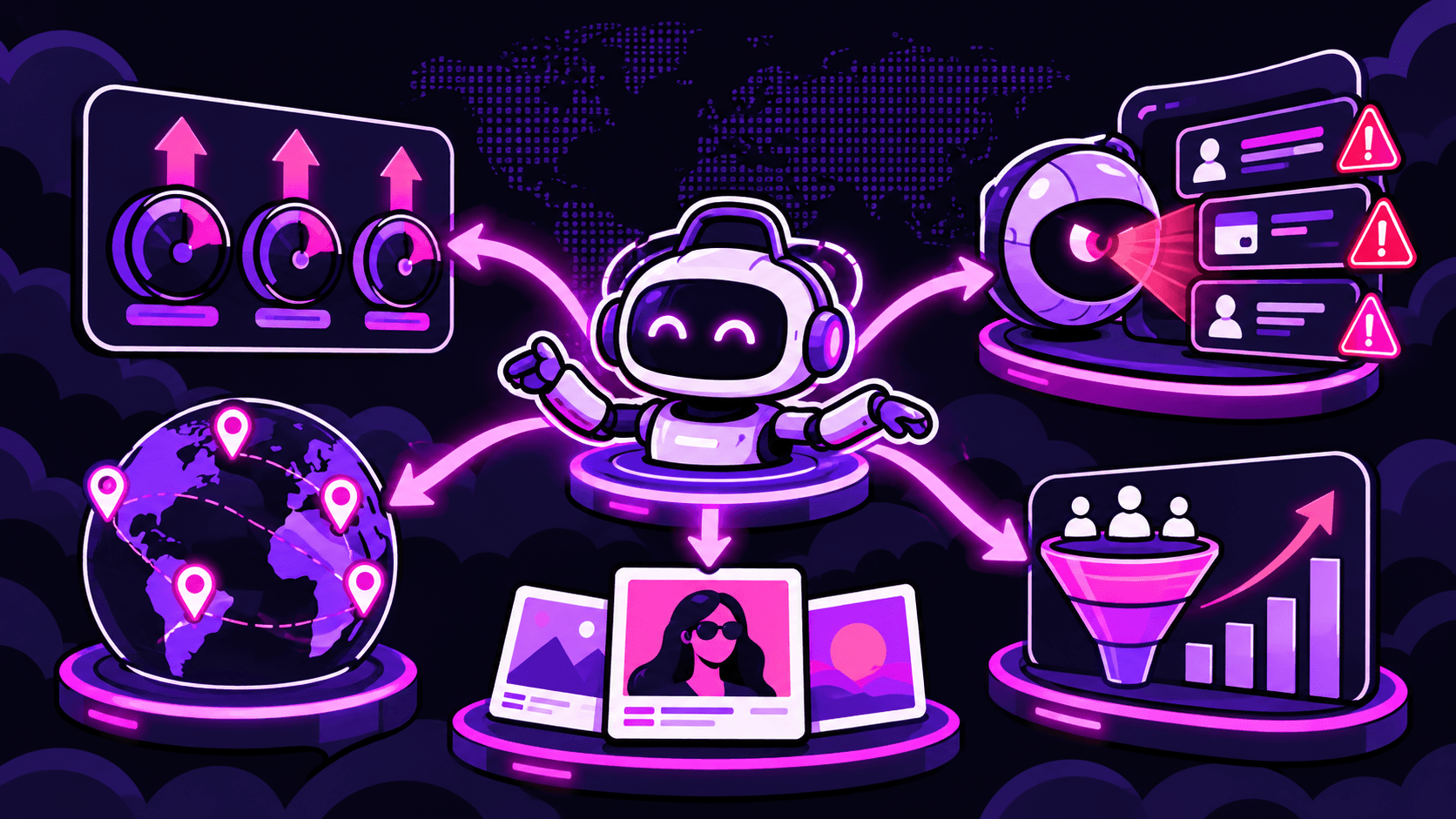
AI is no longer just a tool for writing copy. In 2027, AI agents manage bids, generate GEO-specific creatives, and optimize funnels entirely on autopilot. Routine tasks are disappearing, but the market is moving much faster as a result.
Automation goes both ways. Platforms like Facebook, Google, and TikTok are using fierce AI-driven risk scoring. The slightest anomaly in account behavior or payment patterns will trigger an instant flag.
2. The Moderation Barrier
Ad networks keep tightening the screws, and the demand for high-quality account setups has skyrocketed. The illusion of "easy money" is gone, forcing teams to rethink how they manage their budgets.
flexcard Expert Insight: We saw two clear trends emerge last year. The upside: more affiliate teams stopped cutting corners on payment infrastructure and started investing in high-quality BIN pools. Instead of just buying the cheapest cards, they now calculate the actual cost of converting a card into spend. The downside: moderation is brutal. Platforms now cross-verify payment methods using the spend history of an entire BIN. If a BIN gets burned out on one ad network, its risk score spikes everywhere else. The market for "toxic" cards is growing faster than services can issue clean ones.
3. Technical Traps and Toxic BINs
Launching campaigns today requires a deep understanding of anti-fraud systems. Moderation doesn't just ban you for bad content—it bans you for technical red flags and a poor payment reputation.
flexcard Expert Insight: Today’s barriers fall into three categories. Technical: mismatched GEOs between the card and the account, billing address errors, or missing 3DS protocols. Behavioral: algorithms treat a card scaling from zero to $2,000 in an hour as a massive red flag. Reputational: toxic BINs. If a card belongs to a pool flagged for fraud, platforms preemptively ban the account, even if your traffic is 100% white-hat. Burnout is a critical issue—teams load up big budgets, the pools get burned, and the accounts go down, taking the remaining funds with them.
Keeping card pools clean in tough verticals like iGaming, Nutra, Crypto, and Dating (especially in highly competitive GEOs like the US, EU, Brazil, and India) requires a solid infrastructure.
flexcard Expert Insight: At flexcard, we rotate over 40 BINs from different regions (US, UK, Brazil, EU). We provide detailed merchant analytics over 30 days and refund the top-up fee if a specific BIN doesn't fit a team's needs. This allows affiliates to diversify their risk and make data-driven decisions.
4. The Shift to "Warm" Traffic and Direct Click
Blindly burning through standard banners is an outdated strategy. The market is pivoting to high-intent formats. Direct Click (traffic from parked domains, typosquatting, and surveys) is a major growth driver because the user is already engaged and ready to act. However, as the traffic quality increases, the technical barriers to paying for these campaigns get harder.
5. Scaling Takes Discipline
When a team grows to a dozen media buyers, solo habits and a chaotic distribution of cards inevitably lead to cash flow gaps and burned limits. Scaling in 2027 requires strict internal organization.
flexcard Expert Insight: Proper team management features are a baseline for growth. You have to separate roles (card issuance, viewing, funding), set daily limits for specific cards and overall BIN pools, and manage funds on the fly without stopping active campaigns. Without this, scaling a team of 10+ people turns into an unmanageable budget drain.
6. Essential Skills for 2027
The profile of a successful media buyer is now heavily skewed toward technical and analytical skills. In a hyper-competitive market, the winners aren't just the ones who know how to launch ads—they are the ones who know how to manage financial risk.
flexcard Expert Insight: The core skills for this year include a deep understanding of payment infrastructure (BINs, MCCs, 3DS, risk scoring), solid unit economics, the ability to react to market shifts in hours, and well-structured team processes.
For Beginners: Don't chase the cheapest options. A cheap BIN almost always means a toxic BIN. Start with complete isolation (one source, one clean BIN, a small budget) and use test cards with transparent analytics.
For Experienced Teams: Diversify your payment pools and use software with strict limits and roles to protect your capital. If you spend over $50k+ a month, build direct partnerships with card providers to get priority access to fresh BINs.
In 2027, affiliate marketing has fully evolved into an industry of technological systems. AI automation, high-converting sources like Direct Click, and strong creatives are just the baseline. The long-term winners are the ones who build bulletproof financial discipline and protect their campaigns at the payment level. Manage your risks consciously and partner with tech providers you can trust.