The MyBid blog is your expert guide to conversion traffic.
We share real-world case studies, insider tips, and practical guides for our
ad network. Learn how to master these tough verticals and run profitable
campaigns with our tools. No theory, just actionable advice to boost your profit.
Media buying is pretty simple — you rent space on websites and apps to show your ads. You find where your audience hangs out, talk to the people running those places, get your ads up, and see what happens. Sounds easy, but this is where you either make your money work hard or watch it disappear.
The goal is buying impressions or clicks without overpaying. Not just throwing ads on cheap sites and hoping. You want to reach the right people at the right moment when they're actually paying attention. Get that right and your budget goes way further.
Before buying anything, you do media planning. You figure out your audience, pick channels and formats, crunch numbers, and set goals. End result is a media plan — your roadmap showing where you're going, what you're spending, and which platforms you'll use.
Two Ways to Buy Ads
You've got two paths: manual or automatic.
Manual buying means a media buyer does everything themselves. They find contacts for website owners, channel operators, bloggers. They email, negotiate prices, hammer out details. Takes time, but sometimes you need it — like locking down exclusive deals or getting on sites that don't do automatic auctions.
Automatic buying uses programmatic platforms called DSPs (Demand-Side Platforms). You log in, set your parameters: who you want, what you'll pay, which countries. The platform handles the rest — hits ad exchanges, joins real-time auctions, grabs impressions. All happening while a page loads. Highest bidder wins. This is for massive reach when you don't want to negotiate with thousands of sites manually.
The algorithms do heavy lifting — tracking user behavior, interests, location, devices. They figure what you should pay for specific people. Good DSPs have bot protection so you're not paying for garbage traffic.
Who's Involved
At minimum, two players.
Publisher — owns the ad space. Could be a website owner, Telegram channel admin, or ad network. They set prices and decide what ads they'll accept.
Advertiser or media buyer — puts up the money and wants results. Often advertisers hire specialists — media buyers or agencies — to handle details. Then you've got business, agency, and publishers all in the mix. The media buyer connects everyone.
With programmatic, add a third: the DSP platform. It's the tech bridge making automatic connections work.
Where People Place Ads Online
Plenty of places — social networks, websites, video platforms, mobile apps. What you pay depends on traffic, site topic, audience quality, and format. Some charge by impressions, some by clicks, others by subscriptions or purchases.
Social networks each run by their own rules. You can't run the same ad everywhere and expect it to crush. Something killing on TikTok might bomb on Telegram. And yeah, vice versa.
How Different Social Networks Work
Facebook and Instagram (Meta). Powerful targeting tools, but moderation is tough. For clean offers, lookalike audiences, A/B tests, and conversion optimization work great. On Instagram, visuals rule — Stories and Reels. Creative makes or breaks you.
TikTok. Ads have short shelf life here. Speed matters — make fast, launch fast, check stats faster. If a video isn't taking off after hours, swap it. Budget disappears quick, so watch CTR and conversions from minute one. Great for impulse stuff: dating, games, cheaper products.
Telegram. No standard ad account with neat targeting. Buying means working directly with channel admins or networks. Manual traffic, but conversions can be solid because people trust what they read. Works for complicated products, finance, crypto — anything needing audience warm-up.
YouTube. Takes more effort. Making decent video is harder than slapping together a banner. But people trust video more, so payoff can be bigger. Great for complicated stuff needing explanation. Shorts work for reach and quick reactions.
Other options. Snapchat with younger crowd — they respond to bright, grabby creatives. X (Twitter) with news vibe where short and timely matters. More for niche audiences.
Every network needs its own approach. Same offer performs completely different depending where you show it.
What a Media Buyer Actually Does
The process has clear steps, whether manual or through DSP.
First — immersion. The buyer digs into the product, figures the audience, where they hang out, what competitors are doing. Skip this and everything after is guessing.
Second — channel list. Based on research, pick specific platforms. For automatic, this becomes DSP targeting: gender, age, location, interests.
Third — reach out and negotiate. Manual means contacting platform owners, asking terms, getting proposals. Industry calls this RFP — Request for Proposal. You lay out goals, rough budget, KPIs, deadline. Smart buyers use templates.
Fourth — sort responses. Publishers send offers. Buyer throws everything in a spreadsheet, compares prices, reach, promising options. Picks channels giving most bang for buck.
Fifth — make it official. Agree terms, sign paperwork. Online this is usually an Insertion Order — IO. Spells out client, dates, formats, budget, KPIs. Each channel gets separate order.
Sixth — get creatives ready. Banners, videos, copy should be done. Buyer checks everything against platform rules. Different networks want different image sizes, video lengths, wording. Fail moderation and everything stops.
Seventh — launch and watch. Ads live. Buyer tracks impressions, clicks, conversion rates, cost per result. Something off? Jump in quick. Swap creatives, shift budget, kill what's not working. Automatic systems let you tweak real-time.
Eighth — figure what happened. Campaign ends. Post-campaign report compares plan versus actual. Shows which channels and creatives crushed, which audience parts were most into it. Not busywork — it's how you avoid repeating mistakes and double down on what worked.
Payment Models for Online Ads
Source: CallTouch
Few ways to pay, depending on what you want.
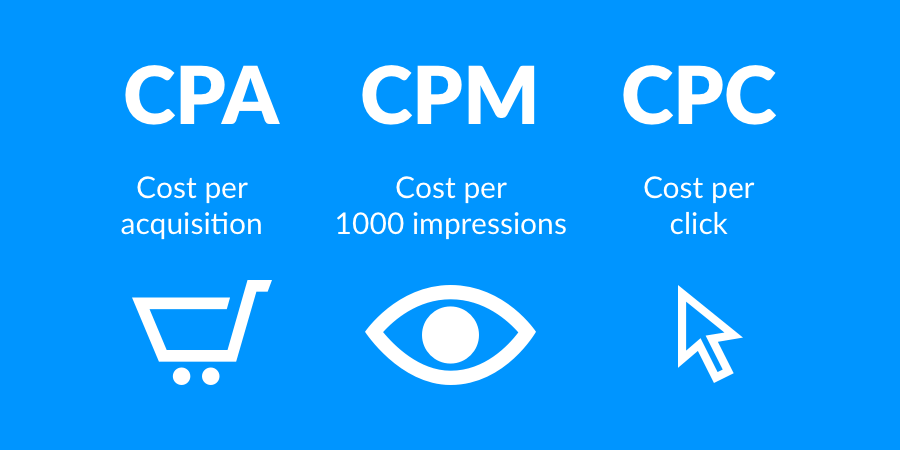
CPM — Cost Per Mille, cost per thousand impressions. Pay every time your ad shows a thousand times. Clicks don't matter. Good for brand awareness.
CPC — Cost Per Click. Pay only when someone clicks and lands on your site. Most popular model — makes sense: you pay, you get a visit.
CPA — Cost Per Action. Pay when someone does something specific — buys, signs up, subscribes. Advertiser's dream, platform's risk. But it works.
CPL — Cost Per Lead. Version of CPA — pay when someone fills a contact form. Shows up in B2B where single contact can be worth real money.
CPI — Cost Per Install. For mobile apps. Pay every time someone downloads and installs.
You can mix models at different funnel stages and platforms. Nothing says pick just one.
Good and Bad of Online Media Buying
Lots good. First — endless places to advertise. Can find audience for anything. Second — crazy precise targeting. Modern platforms let you dial in by gender, age, location, interests, behavior. Third — transparent. Online you can count almost everything: impressions, clicks, conversions, money spent.
Downsides though. Biggest is fraud. Shady publishers or networks run bots to fake impressions and clicks. You pay for "traffic" nobody saw. Good DSPs have anti-fraud filtering suspicious stuff, but nobody guarantees 100%. Another downside — complexity. Doing this right means understanding settings, metrics, how auctions work. You can't just throw money and hope.
And competition — real. Popular niches, bid prices climb. Without smart strategy, you burn cash fast.
Quick on Anti-Fraud and Protecting Money
Fraud is automatic buying's nightmare. Bots, click farms, domain spoofing — it's out there. To avoid feeding scammers, platforms use pre-bid filters, check publisher lists against ads.txt, watch for weird behavior. Decent DSP gives traffic quality reports. But you still gotta watch. Sudden CTR spikes with zero conversions? Red flag.
Who's a Media Buyer Anyway
Media buyer buys ads for living. Their job:
digging into audience and market research;
picking channels and formats;
hashing deals with publishers;
setting campaigns and watching budget;
tracking CTR, CPC, CPA, ROI;
constantly tweaking and optimizing.
Good buyer knows numbers, digital tools, negotiates, decides fast. This isn't learn-once-and-done. Market changes, platform algorithms change — always learning.
Media buyers work at agencies, in-house, or freelance.
And Media Selling
Media buying is purchasing ads, media selling is selling them. Usually agencies or platforms do this — gather ad space from publishers and offer to clients. Point is bulk is cheaper. Agency buys tons at discount, resells to advertisers, keeps markup or shares discount.
Affiliate Marketing and Media Buying
Affiliate marketing (sometimes called traffic arbitrage) is bigger picture. Making money from gap between what you spend getting a customer and what they pay you. Media buying is one piece — handling paid traffic.
Affiliate marketers mix paid and free traffic, test combos, work different verticals. Bottom line is profit. Media buyer handles one thing: buying traffic as cheap and quality as possible.
What's Happening in 2026
Everyone's paying more attention to traffic quality. Just buying thousand impressions isn't enough — viewability and engagement matter more. Machine learning predicts conversions and tweaks bids real-time. AI tests millions of creative and audience combos, finding most profitable connections.
Also moderation keeps getting stricter. Platforms enforce rules harder, especially in sensitive areas — finance, health, gambling. Media buyers gotta stay current and adapt creatives fast.
Where MyBid Fits In
MyBid is built for automatic media buying. Works as both DSP for advertisers and network for publishers. Advertiser? Log in, set campaign, get tons of traffic. Got a website? Join as publisher, make money from your traffic.
For advertisers, MyBid gives over 5 billion impressions daily across 200+ countries. India, Egypt, Algeria, Iraq, all through Latin America. Bids start at $0.00003 per click — test ideas without huge budgets. Supports main formats: Push, Popunder, In-page, Video, Banner, Native. Built-in fraud protection, fast moderation, real-time stats. Pay by card, transfer, various systems — lots options.
Publishers get attractive terms too. CPC rates hit $0.015 for quality traffic. Best payouts for visitors from USA, Canada, UK, Germany, Australia. Big plus: MyBid promises safe monetization without search engine blocks. Huge if you're getting traffic from Google and worried about strikes for "bad" ads.
Publishers don't need complicated scripts. One code on your site, everything automatic. Fast payouts, multiple withdrawal methods: Bitcoin, Webmoney, PayPal, Tether, others.
Stuff to Keep in Mind
Media buying isn't just "buying ads." It's constant thinking, analyzing, deciding. Manual gives flexibility and exclusive placements but eats time. Automation through DSPs lets you scale and save resources but needs tech understanding.
In 2026, successful campaigns aren't always biggest budgets. They're right strategy, accurate targeting, smart money allocation. Tools like MyBid let you do exactly that — work different countries, formats, payment models without overpaying.
If you're an advertiser, automatic ad buying is worth getting into. Saves money and time. If you're a publisher with a site, connecting to good ad network can seriously boost what you make. Media buying's a long game, but online today? You just can't skip it.