The MyBid blog is your expert guide to conversion traffic.
We share real-world case studies, insider tips, and practical guides for our
ad network. Learn how to master these tough verticals and run profitable
campaigns with our tools. No theory, just actionable advice to boost your profit.
[ How to Monetize a Website: 8 Proven Strategies for 2026 ]
28.05.2026Affiliate Marketing How to start?16 min
Contents
Seriously, how much cash do the big publishers rake in from their sites? Some news sites are pulling in millions every month just off ads. But listen, you don't need insane traffic to actually start making money. A smart, solid plan combined with even a few thousand visitors a day is usually plenty.
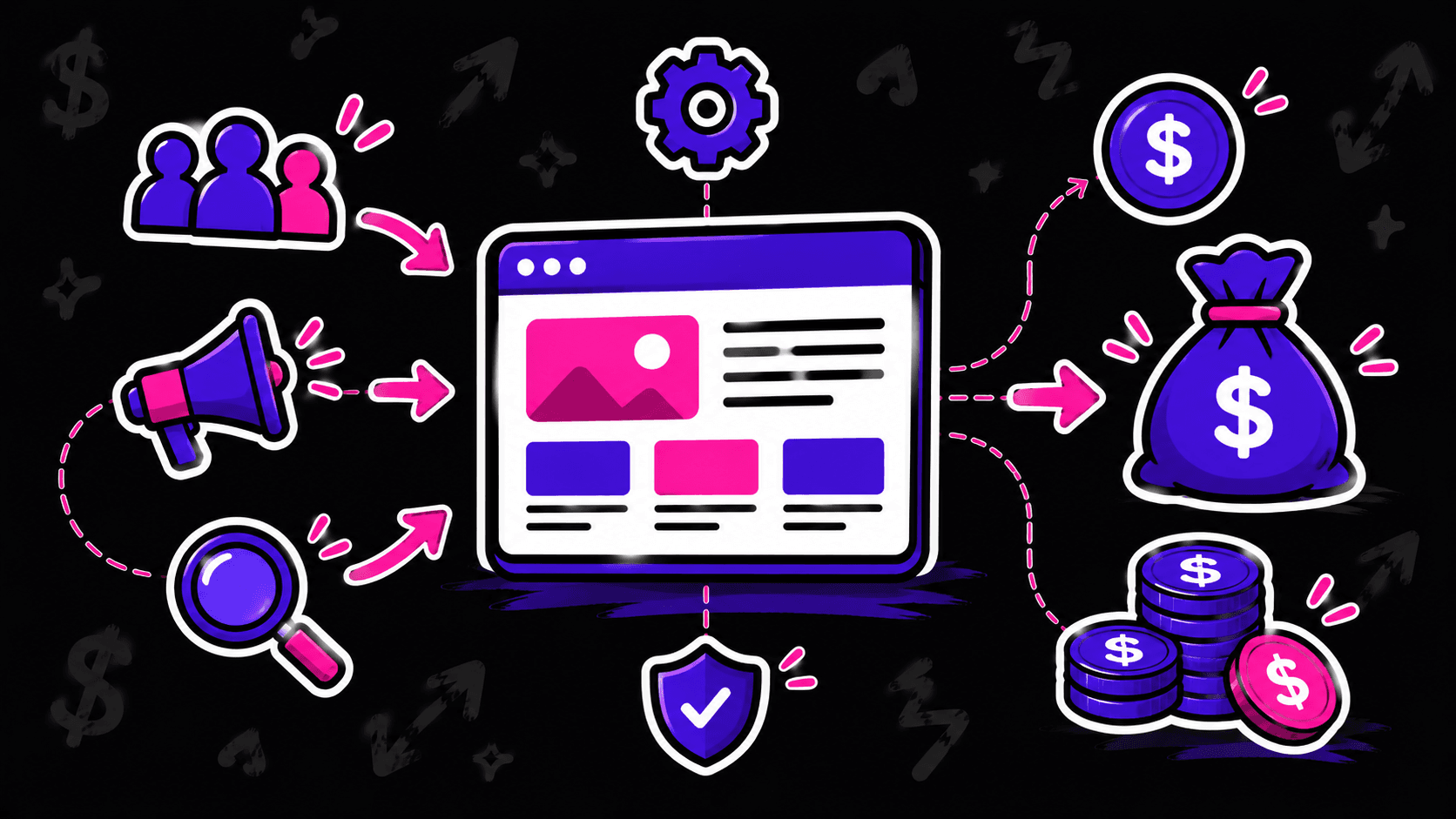
Basically, website monetization is just turning your project into a steady income flow. This happens when you use ads, affiliate links, subscriptions, sell digital stuff, or whatever works.
For 2026, we’ve nailed down 8 ways that consistently get results:
Display advertising through ad networks.
Push notifications as a separate monetization format.
Affiliate marketing (CPA, RevShare).
Native ads and sponsored integrations.
Selling digital products or online courses.
Paid subscription or membership model.
Email list monetization.
Selling ad space directly.
Next, we'll dive into each of these. No boring fluff, promise. I’ll tell you who each method is best for, what you can realistically earn, and how to skip the typical screw-ups.
What Is Website Monetization?
Website monetization is just a bunch of ways a site owner can actually make money from people visiting their pages. This could be through showing ads, selling your own products or services, asking for a fee to see content, or even taking donations. The critical part: whatever you pick, it can’t totally trash the user experience, and it has to make sense for what your site is about.
Strategy #1 — Display Advertising (Ad Networks)
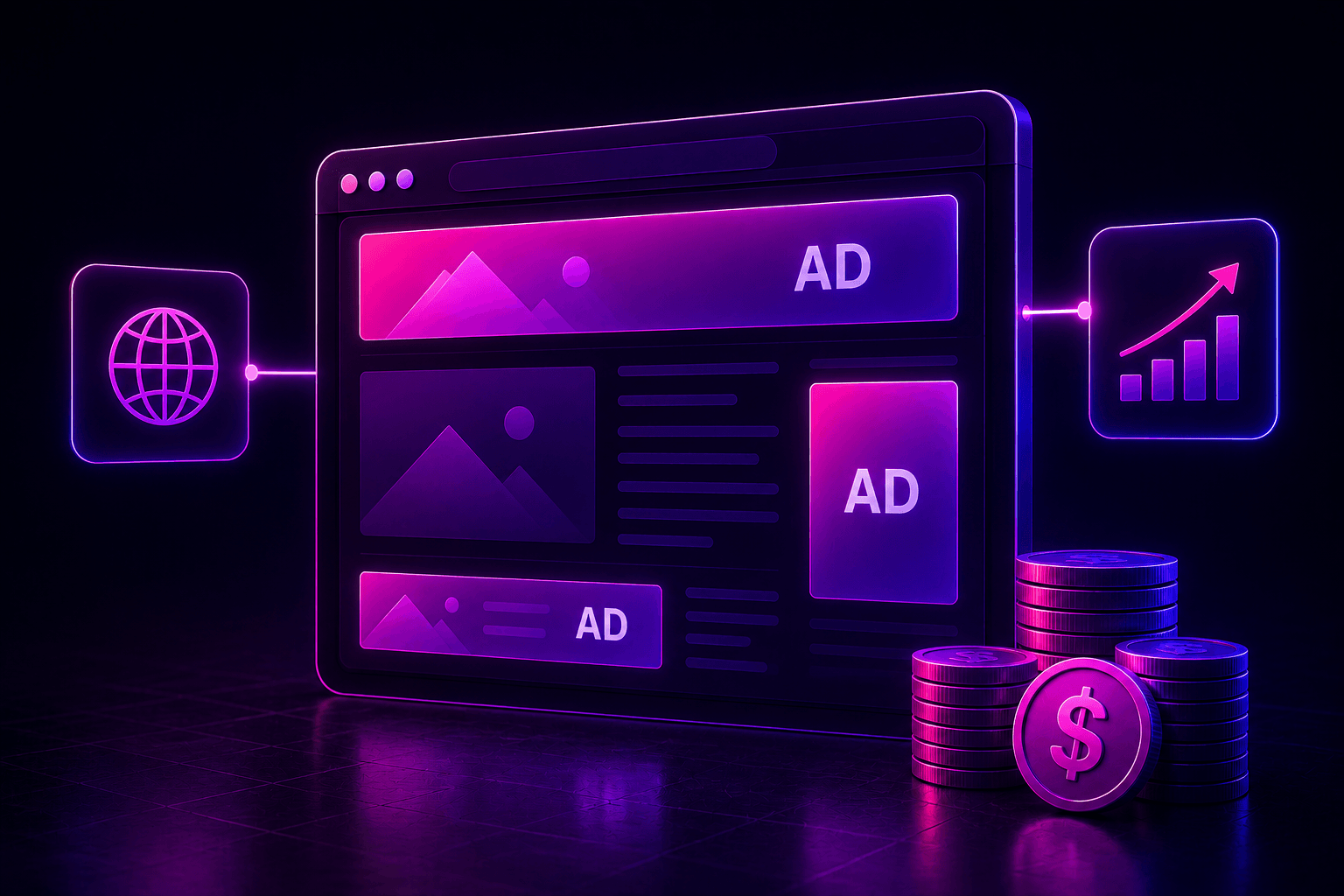
This is what almost every news portal, blog, forum, or funny content site uses. You just drop a piece of code onto your pages, and the ad network figures out which ads fit your visitors best. Typically, they pay based on CPM (per thousand views), CPC (per click), or sometimes CPA (per action/lead).
How it works
You join an ad network, grab the code or plugin they give you, and stick it on your site. After that, the network handles finding the advertisers, running the necessary auctions, and then paying you when someone sees or clicks something. Your income is directly tied to how much traffic you get—and how high-quality that traffic is.
Ad formats
Networks these days use a few different formats. Classic banners are the standard rectangles, usually placed at the top, bottom, or side. Then there's in-page push—these are notifications that pop up right on the page, kind of like regular push notifications but without needing the user to subscribe. Popunders are those sneaky windows that open under the main browser tab; people usually only see them once they close the main page. Oh, and video ads—short clips that run before, after, or even in the middle of your main content.
Which networks to choose
If you're just starting out, Google AdSense or Media.net are decent options. They take sites with low traffic, though their take is bigger and your payouts are smaller. Once you hit maybe 20,000 to 50,000 unique monthly visitors, you should look at premium networks like Mediavine or AdThrive; they offer way better pay per impression.
You should also check out the MyBid platform—they work with publishers big and small, covering popunders, push, in-page push, banners, and video. They’ve got their own anti-fraud systems and use SmartCPC or CPA Goal payment models. Plus, they process monetization requests fast, and payments are steady.
When this strategy is effective
These display ads are perfect for sites that pull in tons of "cheap" traffic—think news, weather, horoscopes, funny videos, stuff like that. If your site is super niche (like for vets or just construction stuff), banner revenue will drop. But that’s fine, just combine it with other ways to make money.
The downside, obviously, is that you need a huge amount of traffic to actually make decent money. Also, people hate being overloaded with ads, so you need to find the right balance—don't jam too many blocks onto one page.
Strategy #2 — Push Notification Ads
People mix up push notifications and regular banners all the time, but they’re totally different. The user has to opt-in first, saying they agree to get notifications from your site. Once they do, you can send them ad messages even when they’ve left your page. It’s basically email, but the message pops up directly on their phone or desktop screen.
Why it’s profitable for publishers
For starters, your audience doesn't disappear just because they closed your tab. Second, push has an awesome CTR (click-through rate)—often hitting 1–5%, which is huge compared to banners that might only get 0.5%. Third, you can actually send a few notifications daily without being flagged as spam, since the subscriber gave you the OK.
Average revenue per thousand views (RPM) from push can swing wildly based on where the user is (geo) and the niche you’re in. Just know that standard banner ads usually bring in less money per thousand views than push does.
Best verticals for push
Push works best for niches like gambling, betting, dating, sweepstakes, utilities (VPNs, antivirus), and nutra. E-commerce and apps do well too. Even content sites with great articles can use push to suggest related stuff—that’s not an ad, that’s just getting people to read more pages.
How to set it up
Pick a platform that handles push notification monetization. MyBid, for example, offers this format with easy integrations for WordPress and other CMS systems. You install the subscription code, grow your list of subscribers, and then the platform automatically pushes ad messages to them. You get a cut of every impression or click.
A quick note: MyBid makes earning from push notifications pretty easy, without any complicated technical setup. They use a SmartCPC model, meaning you get a reliable payment every time someone clicks, because their algorithms automatically optimize the bids.
Affiliate marketing is the way to go if you hate jamming your site with banners but still want to make money recommending things. You drop links for products or services, and if someone clicks that link and then buys something (or submits a lead), you get a commission.
How affiliate marketing differs from regular ads
With standard display ads, they pay you just for a click or view, even if the person doesn't buy anything. Affiliate marketing is different: you only get paid if you generate an actual result—a sale, a sign-up, or an app install. This means the risk is lower for the advertiser, but higher for you. You don't just need eyeballs; you need actual customers.
The upside is that commissions can be huge for things like online courses. Plus, in certain areas, like finance or gambling, you get paid just for confirmed sign-ups.
When affiliate marketing beats display
Affiliate marketing crushes display ads if you run a niche site and your audience is loyal and trusts you. Take a travel blog: skip the annoying “Buy a tour” banner. Write a genuine post, like, “How I flew to Thailand with airline X,” and embed the affiliate link there. Your conversion rate will skyrocket.
It's also ideal for writing reviews, doing product comparisons, or compiling those “best tools for…” articles. Visitors are already looking for info and are often ready to purchase whatever you suggest.
How to start
Go sign up for the big affiliate networks, like Amazon Associates (good if you have a global audience), ShareASale, or CJ Affiliate. Other networks like Impact and PartnerStack might work better for different types of traffic. Here’s a tip: don’t try to promote everything at once. Pick maybe 2 or 3 offers that actually make sense for your readers and test those first. After a few weeks, check the conversion rate and what you’re making per click. If the numbers are solid, then it's time to scale up.
(Internal link → article about CPA Marketing)
Strategy #4 — Sponsored Content & Native Ads
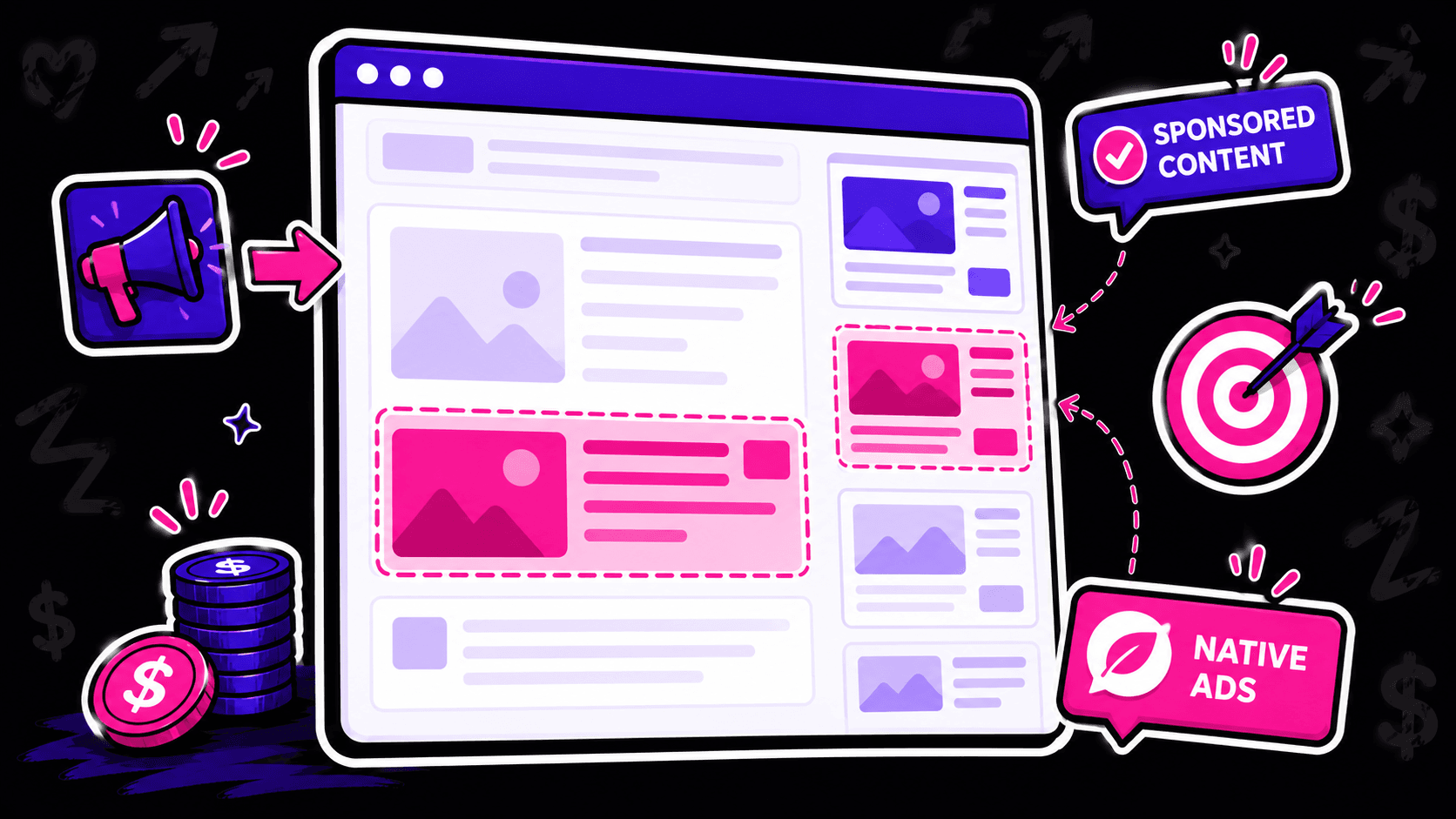
This is simple: a company pays you a flat fee to create a post, film a video, or review their product. A lot of the time, the user doesn’t even realize it’s an advertisement because it looks exactly like your normal site content.
How it differs from regular ads
Banners and push notifications are obvious to everyone—they either click them or they don't. Sponsored content, however, is text, video, or audio that just naturally fits into your regular material. Your readers view it as genuinely useful information, so they trust it more, which means advertisers pay a higher price.
How to find sponsors
You have three main options. First, set up an “Advertise Here” page that includes a media kit—show your traffic numbers, who your audience is, and your rates. Smart brands will find that page when they search. Second, join native ad exchanges like Outbrain, Taboola, or MGID. They automatically pair relevant sponsored content with your site, and you get a cut of the views. Third, just reach out to companies yourself. Find the marketing contacts and shoot them a quick, clear proposal.
Important rules
Always, always include a disclosure tag on sponsored content. That’s required by law in tons of places. Don’t accept gigs that don’t actually match your niche—that's the fastest way to destroy your audience’s trust. And obviously, never publish harmful or deceptive garbage just for a quick payout.
Strategy #5 — Selling Digital Products or Online Courses
If you really know your stuff, you should create an ebook, checklist, template, preset, video course, or even a full online program and sell it straight to the people who visit your site. Unlike ads or affiliate links, you get to keep almost all the revenue yourself—minus whatever the payment processor charges.
Why it’s profitable
You make the product once, and you sell it indefinitely. The profit margin per customer is usually pretty high. You don't need a million visitors monthly; you just need a few thousand people who are actually dedicated to your content.
Which digital products sell well
Ebooks and guides are the easiest place to start if writing is your thing.
Templates and presets work great for people like designers, photographers, or video editors.
Online courses and webinars are solid if you have valuable knowledge to share.
For developers, software, scripts, or website themes are a good bet.
If you work in B2B, consider selling paid research, reports, or analytics.
How to organise sales
You can use off-the-shelf platforms like Gumroad, Sellfy, Payhip, or Teachable if you're doing courses. Or, if you use WordPress, just install WooCommerce and a digital goods plugin. The main thing is setting up file delivery to happen automatically once payment clears. Please, don't try emailing files to every single buyer.
Here's a tip: before launching the final paid product, try giving away a mini-version or checklist for free. See how many people actually download it. If there’s strong interest, you know the full product is worth building.
Strategy #6 — Membership / Subscription Model
This setup means you charge people a regular fee—monthly, yearly, whatever—to get access to special content, a private group, or other extra features. Subscriptions are great because, unlike one-off sales, they create predictable, recurring income.
Which niches it fits
This works well for serious publications that do in-depth analytical investigations.
Educational sites with large libraries of lessons.
Tech/IT resources that offer exclusive guides.
Communities built around a shared interest where people chat in a private forum.
In short, it works anywhere you’re offering something people can’t just find for free on Google.
What to offer paying subscribers
Give them early access to your videos or articles, totally ad-free.
Offer in-depth content that you don't release to the public.
Let them join Q&A sessions and webinars.
Set up a private Telegram channel or a chat where they can talk to experts.
Offer them special deals on your other services or courses.
How to implement
For WordPress, MemberPress or Paid Memberships Pro are the easiest plugins to set up. They link up to payment systems, automatically handle who can see which pages, and send out renewal notices. If you run a newsletter or news site, platforms like Substack or Ghost can work, but you'll be stuck in their system.
The biggest hurdle is keeping people subscribed. If you stop creating new, exclusive material, they will leave. You have to commit to regular content production.
Strategy #7 — Email List Monetization
Your email list is seriously valuable. Anyone who gave you their address is already hooked on your topic. You can send them ads, affiliate offers, product launch announcements—all without any middlemen taking a cut.
Ways to earn from emails
You can sell directly by pushing your own digital or physical goods.
Use affiliate links to suggest other businesses’ products and earn a commission.
Companies will pay you for sponsored mentions inside your newsletter.
You can charge for a premium version of your newsletter (like what people do on Substack).
How much you can earn
Conversions from email are usually way better than what you get from social media. Say you have 10,000 subscribers; if 20% open and 5% click, that's 100–200 clicks from just one email. If your affiliate commission is decent, that translates to a reliable stream of money.
How to start
First thing's first: build that list. Put a signup form somewhere obvious, maybe offering a free guide or checklist in return for their email. Use a service like ConvertKit, MailerLite, or SendPulse. Once you have 500 to 1,000 emails, you can start talking to advertisers or joining affiliate programs.
But seriously: don't spam. Send emails maybe two or three times a week max, and make sure you’re always sending something helpful, not just advertisements.
Strategy #8 — Selling Ad Space Directly
This is where you bypass the ad networks entirely and talk straight to the companies. They pay you a flat monthly fee—or per thousand views—to put a banner or a text block right on your site.
Why do this if AdSense exists?
Because direct deals usually pay three to five times more than those automated auctions. Advertisers gladly pay extra because they get a guaranteed, high-visibility spot and access to your specific, targeted audience.
How to sell
Build an “Advertise With Us” page that clearly describes your ad options (header banner, sidebar, in-article spots). List your prices—like how much for the header banner. Throw in a discount if they pay for six months up front. Post the link on social media and in your emails. Also, don't wait for them—go contact potential advertisers yourself. Find companies in a similar niche and send them a proposal.
Which formats to sell
You can sell fixed banners in the sidebar, header, or at the bottom of posts.
Site branding (like a sponsored background image).
Sponsorship of a recurring column or a podcast you run.
Simple shout-outs in your weekly email newsletter.
Downside: You need to spend time on sales and client communication. But once you have regular partners, they will renew month after month.
How to Choose the Right Monetization Strategy
There’s no magic bullet that works for everyone. What generates huge cash for a news site could literally destroy a small personal blog. You need to focus on these three things.
By traffic type
If you’re pulling in tons of random visitors from search engines or social media who bounce fast—stick to display ads and push notifications. They aren't likely to care what ads show up. If you have a dedicated, loyal audience that comments and keeps coming back, then affiliate marketing, subscriptions, or selling your own digital stuff will be better. They actually trust your recommendations.
By niche
For highly specific niche sites (like cooking, home DIY, gardening, or marketing), affiliate programs and direct ad sales are often the way to go. For general sites (humor, news, videos), use ad networks. Educational resources should lean toward courses and subscriptions.
By audience size
If you get less than 10,000 sessions a month, start with donations, direct sales, or affiliate links.
If you're hitting between 10,000 and 100,000, start adding AdSense, native ads, and push notifications.
Once you’re over 100,000, it’s time to switch to premium ad networks and chase direct deals.
Decision tree / table
If your site is…
…first try…
News or entertainment
display ads, push
Niche blog (reviews, tips)
affiliate programs
You have expertise
digital products or subscription
High traffic, known brand
direct ad sales, sponsored posts
Audience on social + email list
email monetization
How Much Can You Earn Monetizing a Website?
Averages: Benchmark CPM/RPM Data by Niche (based on real 2026 numbers):
Niche / vertical
Popular format
Average CPM / RPM (USD)
News & Media
Display ads
$1–3
Technology & IT
Display + affiliate
$3–8
Finance & Crypto
Native + affiliate
$8–20
Health & Wellness
Display + native
$5–15
Home & DIY
Affiliate + direct ads
$4–10
Travel
Affiliate + sponsored
$3–12
FAQ
How do websites make money without selling products?
They rely on display ads, push notifications, affiliate marketing, sponsored content, and subscriptions. Usually, they earn through publisher ad networks like Google AdSense, or simply using CPM payment models.
What is the best way to monetize a website for beginners?
Go with Google AdSense or push notification ads using MyBid. Both are simple to get running and don't need huge audience numbers. Once your traffic grows, then start adding affiliate programs.
Can I monetize a website with zero budget?
Yep. Use donation buttons or affiliate links—zero investment needed upfront. But if you want real money, you need traffic, which takes either paid promotion or just time.
Will ads kill my site’s user experience?
If you plaster too many banners all over a short article, absolutely. Keep it to maybe 2–3 ad blocks per screen, and be cautious with sticky formats. Always keep an eye on your bounce rate and how long people stay on the site.
Should I use multiple monetization strategies at once?
You definitely should. Nearly every successful site mixes display ads, affiliate links, and maybe selling their own courses. Diversification is your safety net if one income stream dries up.
Can I monetize a website on free hosting?
Almost definitely not. Free hosts usually ban commercial ads, they show their own banners, and they cap your traffic. Just buy the cheapest paid plan—it's only a few dollars monthly.
Outro
Monetizing a website doesn’t happen overnight. For the first couple of months, you’ll be experimenting: moving ad blocks around, testing different formats, and killing whatever doesn't work. But eventually, you'll land on a mix that brings in steady money.
The biggest takeaway: don't get greedy. Overloading your site with intrusive ads or affiliate links will just drive people away. You're better off earning a bit less but keeping your audience loyal. A year from now, that loyalty means you'll be making cash even while you're asleep.
If you want a simple way to start with push and display ads, take a look at MyBid. They work with sites of all traffic sizes, offering popunders, push, in-page push, banners, and video. They have built-in anti-fraud, clear stats, and reliable payouts. Plus, they offer specific support and terms for publishers.
Start easy. Pick one or two strategies from this guide, test them for a few weeks, and see what the data says. Then add more. Good luck out there.