The MyBid blog is your expert guide to conversion traffic.
We share real-world case studies, insider tips, and practical guides for our
ad network. Learn how to master these tough verticals and run profitable
campaigns with our tools. No theory, just actionable advice to boost your profit.
The industry enters the year under heavy pressure. Several forces hit the market at the same time: regulation, payments, competition, rising traffic costs, search engine changes, and the growing influence of LATAM. This isn’t a crisis or a downturn — it’s a moment when every company has to rebuild its processes instead of simply reacting to outside changes.
The years 2024–2025 showed that old playbooks no longer deliver stable results. SEO became unpredictable, PPC turned expensive, payments became complicated, and regulators became more attentive. In 2026, these trends don’t fade — they become the new normal. Because of this, operators, affiliates, studios, and suppliers start working differently: more analytics, more compliance, more focus on traffic quality and product value.
Regulatory Landscape in Europe and Latin America
Source: iGaming.com
Europe
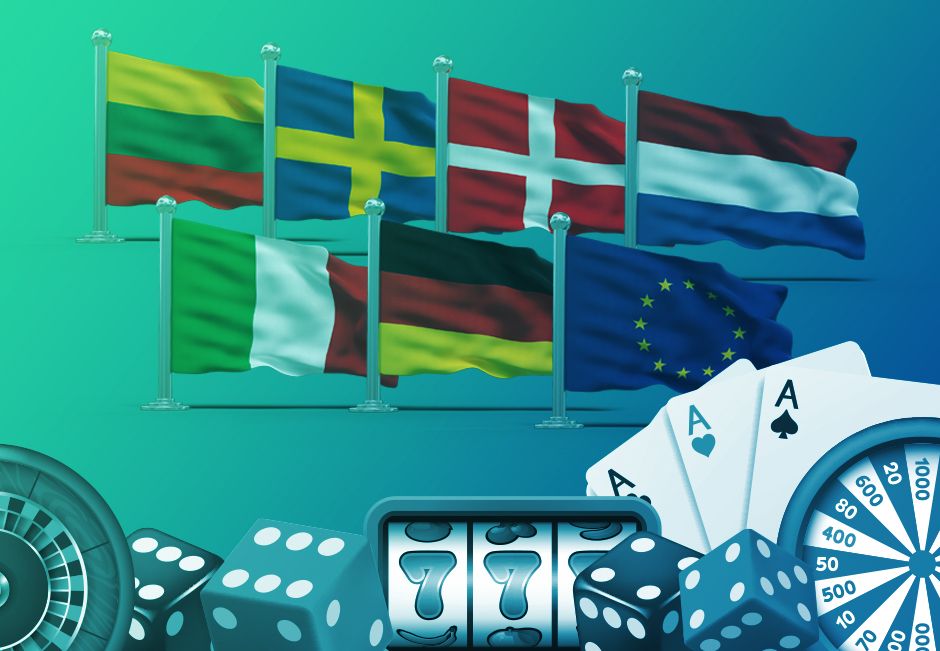
European markets continue to tighten control. Finland is moving to a licensing model, Germany keeps pressure on operators, and the Netherlands and the United Kingdom strengthen reporting and verification requirements. Regulators act precisely: they don’t just introduce new rules — they actively monitor how companies follow them.
For operators, this means higher compliance costs, the need for transparent processes, and a complete rejection of grey practices. For affiliates, it means stricter requirements for traffic quality, content, and promotional materials. For suppliers, it means meeting standards that previously applied only to operators.
Europe remains an important region, but entering the market becomes expensive and time‑consuming. Because of this, many companies start reallocating resources.
Overview of New iGaming Laws in Europe
1. Finland officially begins its transition from a monopoly to a licensed market. The year 2026 becomes a point of no return: the country moves away from the decade‑long Veikkaus monopoly and starts building a fully competitive model. This is not just about issuing licenses — it is a complete restructuring of the entire ecosystem. New advertising rules, strict limits, mandatory player‑protection mechanisms, localized UX requirements, and tight control over traffic channeling all come into play. Finland turns into a new “Scandinavian testing ground” for operators, where only those who treat compliance as a product can truly succeed.
2. A pan‑European standard for preventing gambling harm (CEN/EGBA) emerges and becomes the de facto norm. Although the standard is formally voluntary, it quickly becomes a pressure tool: regulators begin using it as a benchmark during inspections. For the first time, unified requirements appear for risk markers, intervention algorithms, operator action logs, and documentation of every trigger. This transforms responsible gaming from a “set of features” into a full system with evidence‑based processes that can be presented to auditors.
3. Stronger requirements for player identification and identity verification across the EU. In 2026, several countries simultaneously tighten KYC procedures. Germany, the Netherlands, Sweden, and Croatia require early verification, age checks through government databases, identity confirmation before deposits, and mandatory source‑of‑funds analysis at the first signs of risk. Identification becomes a key part of the user experience, making “soft registration” nearly impossible.
4. Croatia undergoes a deep regulatory reform, strengthening control over products and player behavior. The country introduces new identification rules, restricts advertising formats, tightens UX requirements, and adds more player‑protection mechanisms. This shifts the market from “friendly” to one of the most structured in Eastern Europe, where operators must implement advanced monitoring and transparency systems.
5. European countries significantly tighten advertising rules and introduce new bonus restrictions. Spain, the Netherlands, Germany, Italy, and Sweden simultaneously increase advertising oversight. They limit display times, introduce age filters, ban aggressive bonuses, require transparent terms, and demand proven audience segmentation. Advertising becomes a legally controlled process where every creative must be tied to a specific license, geo, and product.
6. Stronger requirements for monitoring player behavior and mandatory early‑intervention systems. Regulators require tracking session duration, loss speed, betting frequency, unusual patterns, and documenting every intervention. Operators must explain why the system triggered, when it happened, and what actions were taken. This turns responsible‑gaming systems into full analytical platforms rather than decorative tools.
7. Growing requirements for affiliate and partner oversight as part of licensing. In 2026, affiliate marketing becomes a high‑risk zone. Operators must verify partners, control creatives, keep impression logs, block illegal materials, and document traffic sources. Responsibility for affiliate violations falls on the operator, making partner programs a core part of compliance.
8. Increased transparency of gaming products and mandatory certification of mechanics. Several countries introduce requirements for public registries of certified games, RTP transparency, risk disclosures, mechanic verification, and RNG audits. This reduces opportunities for grey practices and makes the market more transparent for both players and regulators.
9. Expansion of national self‑exclusion systems and mandatory operator integration. Germany, the Netherlands, Spain, Croatia, and others strengthen integration with government self‑exclusion registries. Real‑time synchronization, automatic player blocking, and mandatory regulator notifications about bypass attempts become required. Self‑exclusion becomes a critical part of gaming architecture.
10. Preparation for the launch of the European AMLA increases requirements for partner and supplier checks. Although AMLA formally belongs to the financial sector, in iGaming it affects operators through new KYB requirements. Operators must verify suppliers, agencies, affiliates, technology partners, and contractors. They must document responsibility chains, keep change logs, and regularly update data. Compliance becomes a continuous process rather than a one‑time check.
Latin America
LATAM continues to gain momentum. Brazil remains the main focus, but operators are actively exploring Mexico, Peru, and Chile. The region grows thanks to its mobile‑first audience, high engagement, and familiarity with alternative payment methods.
The key advantage of LATAM is low saturation. There’s still room for new brands, affiliates, and studios. That’s why in 2026, LATAM stops being a “promising” direction and becomes a required part of the strategy.
Small and Micro Markets
Interest in smaller GEOs is rising. The reason is simple: competition in major regions intensifies, and traffic costs increase. Small markets offer predictability, stable LTV, and the chance to take leading positions quickly.
For smaller operators, this is an opportunity to secure their place. For affiliates, it’s a way to get quality traffic without fighting giants. For studios, it’s a testing ground for new mechanics.
Marketing and Traffic in 2026
SEO
Search results are shifting. Algorithms increasingly prioritize websites with real expertise, strong branding, and deep content. Mass‑produced content loses ground. Sites built on template texts can’t compete.
In 2026, the projects that succeed are those that:
publish analytical materials
work with experts
create unique guides
build an ecosystem around their brand
Google continues updating its algorithms, and the market expects a major cleanup. Because of this, affiliates move from mass content production to precise work with quality.
Key Ranking Factors That Matter Most in 2026
1. Content Experience (CX) Google evaluates not the volume of text but how well a page fully solves the user’s task. Clarity, structure, usefulness, and real value matter. Content should leave the reader feeling that they found everything they needed.
2. Deep alignment with user intent The search engine checks whether the problem is solved in one visit and whether the user returns to search. Content must match the context, level of knowledge, and decision‑making stage. Any mismatch lowers ranking.
3. E‑E‑A‑T and verifiable expertise Google strengthens checks on authors, brands, and sources. Real bios, experience, transparent links, and proof of competence are required. Anonymous or generic content rarely appears in SGE.
4. Structured data and machine readability Markup becomes essential. AI systems rely on it for citations and comparisons. It’s important not just to add schema.org but to accurately describe the business model, services, products, and processes. Clean data improves visibility in AI answers.
5. Topical Authority — thematic depth Google prefers sites that consistently and deeply cover one topic. Clusters, updates, expert materials, and internal coherence strengthen authority. Broad “universal” sites lose positions.
6. AEO — optimization for AI answer engines Content must be suitable for direct inclusion in AI responses: clear statements, short conclusions, FAQs, tables, and definitions. AI selects pages that can be safely quoted without distortion.
7. Brand reputation and digital sentiment Google and AI models analyze reviews, mentions, social media, forums, and media. Consistency and lack of contradictions matter. Reputation becomes a measurable metric that influences trust and ranking.
8. Post‑click behavioral signals Systems track depth of engagement, time on page, interactions, and return‑to‑search behavior. If users leave quickly or continue searching, rankings drop. If they stay and interact, rankings rise.
PPC
Click prices rise, and rules become stricter. Platforms cooperate more closely with regulators, and tools like Humbl.ai make grey schemes harder to run. Black‑hat PPC loses efficiency, while white‑hat campaigns require strong expertise and clean funnels.
PPC remains a working tool, but only for those who can:
test hypotheses quickly
work with analytics
optimize creatives
maintain a high level of compliance
Alternative Channels
Streamers, communities, and influencers continue to grow, but regulatory pressure increases. Platforms introduce new rules, and brands demand transparency. In 2026, this channel remains effective but requires careful work and an understanding of local restrictions.
Main PPC Advertising Trends in 2026
1. Automation becomes the norm, and manual management becomes the exception. By 2026, 90–95% of auction decisions are made by algorithms, not specialists. Performance Max and Demand Gen absorb most budgets because they work with signals humans simply cannot process. Manual bidding remains only for narrow scenarios — brand campaigns, test hypotheses, and training new accounts. Everything else relies on automated strategies that reallocate budgets in real time.
2. Smart Bidding stops being a tool — it becomes infrastructure. tROAS and Value Maximization strategies grow by 40–60% in two years because optimization shifts from “cost per lead” to “customer value.” Google increasingly trains on margin, repeat purchases, and real revenue rather than simple conversions. CPA loses meaning because cheap leads often don’t bring profit, and algorithms take this into account.
3. AI generates most creatives and variations. Up to 70% of text ads and half of banner adaptations are created automatically. The system selects combinations of headlines, images, and videos for each user. This speeds up work by 3–5 times but requires clear briefs and meaning control. AI scales ideas well but does not create strategy. The specialist’s role shifts toward editing and brand management.
4. Metrics shift from clicks to profit and LTV. Businesses optimizing campaigns for LTV gain 25–40% more ROMI compared to those focusing only on CPA. Google Ads now works closely with GA4 and CRM systems: offline conversions, deal amounts, margins, and repeat purchases are transmitted. This helps algorithms find not “cheap leads” but customers who bring real value.
5. Data quality becomes a critical factor in performance. Tracking errors, duplicates, spam leads, and incorrect goals can reduce campaign efficiency by 30–50%. The algorithm learns from what you define as “success,” and if conversions include low‑quality leads, the system starts searching for similar users. In 2026, server‑side tracking, modeled conversions, and regular data cleaning become standard.
6. Ecosystems expand: YouTube, Discover, CTV, and DOOH take up to 45% of budgets. The user journey becomes fragmented. A person may see a brand on Smart TV, move to search, get retargeted on YouTube, and purchase through a messenger. YouTube and Discover grow fastest, while CTV shows 20–30% annual growth. DOOH integrates into programmatic, and brands buy outdoor ads the same way they buy banners.
7. Video, personalization, and UGC significantly boost performance. Vertical videos deliver 35–60% higher CTR than static creatives, and personalized ads increase conversions by 15–40%. Shoppable videos shorten the path to purchase to one or two clicks. UGC creatives and micro‑influencers increase trust and add 20–30% to ROAS because they feel natural and avoid ad fatigue.
8. Ad Fraud becomes a serious threat: IVT grows by 20–35% annually. Modern bots imitate scrolling, clicks, and even form submissions, making them nearly indistinguishable from real users. In some verticals, 15–25% of clicks are invalid traffic. This distorts algorithm training and leads to budget waste. Anti‑fraud systems become a mandatory part of PPC infrastructure, saving 10–25% of budgets and improving data accuracy.
Products and Technology in iGaming
Source: Cidaderve
Casino Content
The year 2025 showed that the market grew tired of endless similar releases. Studios were launching dozens of games every month, but most titles disappeared from players’ attention within days. In 2026, the situation shifts: operators and aggregators choose content more carefully, and studios reduce volume while raising quality.
Games that attract attention share several traits: original mechanics, recognizable visual style, thoughtful game economy, and a clear understanding of the audience. Studios that focus on uniqueness gain an advantage. This applies not only to large brands — smaller teams also find their place when they offer something fresh.
Players have become more selective. They quickly notice copies of popular mechanics and don’t stay long in games that don’t offer a new experience. Because of this, studios in 2026 move from mass production to targeted releases, where each game is treated as a standalone product rather than part of a conveyor.
Sportsbook
The segment grows thanks to micro‑betting, personalization, and models that use AI to calculate odds and suggest options. Users want to place bets in real time, get fast markets, and see recommendations that match their behavior.
The line between sports betting and prediction‑based models becomes thinner. Users want to bet not only on sports but also on events that were not previously considered part of betting. This expands the market and creates new ways to interact with players.
Operators invest in infrastructure that can process large amounts of data and deliver odds with minimal delay. This becomes a standard expectation rather than a competitive edge.
What’s New in Payment Regulation and iGaming Compliance in 2026
1. Global unification of standards instead of fragmented rules. Regulators across countries begin synchronizing AML/KYC requirements, creating unified operator registries and demanding standardized reporting protocols. For the first time, international payment solutions must support identical verification and monitoring procedures across jurisdictions.
2. Shift to digital oversight: AI becomes a mandatory element of control. Laws require operators to use algorithms to analyze transactions, detect anomalies, track player behavior, and identify signs of addiction. Real‑time monitoring becomes the norm rather than an option.
3. Stronger player‑protection requirements and mandatory self‑control tools. In 2026, regulators introduce centralized self‑exclusion systems, strict age filters, deposit limits, mandatory time‑outs, and session‑duration notifications. In some countries, biometric age verification becomes mandatory.
4. New requirements for crypto payments: licenses, bans, and mandatory KYC. The United States introduces separate licenses for operators working with crypto and increases reserve requirements by 30%. Several countries ban anonymous wallets and require identification for all blockchain transactions.
5. Data and infrastructure localization becomes a legal requirement. Many countries require storing player data and processing payments within national borders. This applies to Europe, Mexico, France, and several Asian markets. Without local infrastructure, operators are not allowed to operate.
6. Stricter tax burdens and financial requirements. Brazil introduces a progressive tax of up to 20% GGR, Germany sets a 5.3% turnover tax, and Kenya imposes a 20% tax on winnings. The United States increases capital requirements for operators. Financial stability becomes part of licensing.
7. Restrictions on payment methods and new rules for deposits. Pennsylvania bans credit cards for deposits, allowing only prepaid cards and e‑wallets with prior authentication. Europe introduces bonus limits and mandatory source‑of‑income verification.
8. Centralized regulatory platforms and unified databases. Mexico creates a unified platform for online casinos, Canada launches a national self‑exclusion system, and the EU establishes a single operator registry. Payment solutions must connect to these systems in real time.
9. New licensing requirements and mandatory international standards. ISO 27001, PCI DSS, GDPR, and FATF become mandatory rather than recommended. Regulators require regular audits, XBRL/CSV reporting, and automated monitoring.
10. Emergence of digital identifiers (DID) and “gaming passports.” Blockchain‑based digital IDs compatible with government systems are introduced. This becomes a new requirement expected to become standard in 2026–2027.
Partner Programs and the Affiliate Market
The affiliate market enters 2026 with high competition. Operators choose partners more carefully, and affiliates choose programs that offer stability and transparency. Traffic quality becomes more important than traffic volume.
Content‑driven projects gain an advantage. Websites with strong expertise, analytics, reviews, and news become more valuable than projects built on mass‑produced texts. This is connected to SEO changes and the rising expectations operators have for traffic quality.
Deals involving small assets remain active. Large M&A slowed down, but local deals continue: operators and affiliates buy websites that deliver a steady flow of users. This helps strengthen positions in specific regions quickly.
Partner programs start working like ecosystems: they offer analytics, creatives, support, personalized terms, and tools for scaling. This approach helps affiliates test ideas faster and reach stable results.
Conferences and Industry Events
The event calendar remains overloaded. In 2025, the industry saw a record number of conferences, and in 2026 the situation stays almost the same. However, the attitude of participants changes: companies choose events that bring real value.
Niche and local conferences become more popular. They offer access to the right contacts, allow for focused conversations, and don’t require large budgets. Major events remain important, but companies start distributing budgets differently: one or two large events and several targeted ones.
Organizers have to rethink formats to keep their audience. Participants want less show and more practical value: closed meetings, analytics, real cases, and access to experts.
Top 5 Most Important iGaming Conferences in 2026
1. ICE Barcelona 2026 — the world’s main hub for iGaming innovation January 19–21, Barcelona, Spain ICE is not just an exhibition — it is a global gathering point for the entire industry. In 2026, it reaches a new level. After moving to Barcelona, the event expands with a new Hall 1 (+14,000 m²), making it the largest ICE in history. More than 65,000 participants from 180 countries are expected, including operators, studios, PSPs, regulators, investors, and tech companies. Key highlights of 2026 include the ICE Innovators Challenge — an AI‑driven solutions competition created with Microsoft, focusing on safety and compliance; the ICE Esports Arena — an EA Sports FC tournament with an €8,500 prize pool, emphasizing the growing role of esports in iGaming; and a large zone dedicated to payments, AML/KYC solutions, and crypto infrastructure. Why it matters: ICE is where deals are made, trends are shaped, and new products are launched. For companies, it is the main opportunity to shine on the global stage.
2. iGB Affiliate Barcelona 2026 — the largest event for affiliates and traffic January 20–21, Barcelona, Spain Held alongside ICE, it turns Barcelona into the epicenter of iGaming week. In 2026, more than 11,000 participants, 200 exhibitors, and delegations from 55 countries are expected. It is the key meeting point for affiliate marketers, CPA networks, operators, and marketing teams. What makes iGB 2026 special is its strong focus on traffic quality, compliance, and new marketing requirements; an updated program of masterclasses on SEO, ASO, AI optimization, and anti‑fraud; and unique synergy with ICE, which brings operators and affiliates together in one city and boosts networking efficiency. Why it matters: iGB is the main source of partnerships, new offers, CPA deals, and traffic insights for the year ahead.
3. AIBC Eurasia 2026 — the gateway to the crypto and AI segment of iGaming February 23–25, Dubai, UAE AIBC is a summit at the intersection of iGaming, blockchain, AI, and fintech. In 2026, it gathers 14,000 delegates and more than 400 speakers, including operators, PSPs, Web3 projects, startups, and investors. What makes AIBC key is its strong focus on crypto payments, AML/KYC for blockchain, tokenization, and Web3 gaming; the SiGMA Pitch platform where startups present solutions to investors; and the SiGMA Awards, which shape reputation in the region. Why it matters: Dubai is a global center of crypto regulation, and AIBC is the best event for companies working with crypto, Web3, and AI automation.
4. SBC Summit Rio 2026 — the main gateway to the Brazilian and LATAM market March 3–5, Rio de Janeiro, Brazil Brazil is the fastest‑growing iGaming market in the world, and SBC Rio is the region’s key event. In 2026, more than 12,000 participants are expected, including regulators, operators, PSPs, local partners, and suppliers. Why SBC Rio is a must‑visit: it is the first major event after Brazil’s market regulation; attendance has grown by 200%, and the summit received the Exhibition Growth of the Year award; and it focuses on local payments, taxes, licensing, and the specifics of Brazilian traffic. Why it matters: LATAM has huge potential, and SBC Rio is the best way to enter the market with the right partners and regulatory understanding.
5. SiGMA Africa 2026 — a strategic entry point into Africa March 3–5, Cape Town, South Africa Africa is becoming the “second Brazil” in terms of growth. SiGMA Africa gathers more than 3,000 delegates, 800 operators, and 150 speakers, creating the largest platform for discussing African iGaming. Key topics include mobile gambling and local payment solutions.
Factors That Influence Success in 2026
The year 2026 creates a set of conditions where companies with a steady, well‑built approach feel more confident. There is no universal recipe, but several directions give a clear advantage.
Compliance becomes essential. Regulators increase control, and operators who build transparent processes gain access to stable payment solutions, partnerships, and markets. Compliance stops being a formality and becomes part of everyday operations.
Payment infrastructure plays a major role. Speed and reliability of transactions directly affect retention. Operators who invest in alternative PSPs, crypto solutions, and automated verification tools achieve higher conversion and face fewer obstacles.
Original content matters. Players choose products that offer a fresh experience. Studios that create unique mechanics and visual styles receive more attention from operators and aggregators.
Work with LATAM becomes a strategic requirement. Companies that enter the region early gain recognition, partnerships, and local integrations that help them grow faster.
A system‑based marketing approach brings results. SEO, PPC, streamers, and communities all work well when they are part of one coordinated strategy. In 2026, the strongest projects are those that combine channels, analyze data, and adjust their actions quickly.
Why MyBid Is a Good Fit for Publishers and Advertisers in 2026
Market conditions become tougher, and companies need partners who offer stability, clarity, and support. MyBid helps with all of these tasks.
For publishers, MyBid makes it easier to monetize traffic without unnecessary risks. The platform works with trusted advertisers, responds quickly, and provides analytics that helps increase revenue. The support team helps choose formats that match each traffic source.
For advertisers, MyBid offers access to clean traffic, fast moderation, and tools that help scale campaigns. The platform works with different verticals, supports flexible settings, and helps find combinations that deliver steady results.
As the market raises its standards, MyBid becomes a comfortable entry point for those who want predictable and scalable growth. If you are a publisher or an advertiser, you can join MyBid and use the platform’s opportunities to grow in 2026.
Final Thoughts
The year 2026 doesn’t look like previous seasons. The industry isn’t falling or booming — it is rebuilding itself. Regulators increase control, payments become more complex, competition grows, and marketing requires precision. At the same time, new opportunities appear: LATAM, small markets, original content, and personalized products.
Companies that work consistently gain an advantage. Those who invest in analytics, compliance, payment solutions, and traffic quality enter 2027 in a stronger position. The industry becomes more mature, and this opens space for those who are ready to work deeper rather than wider.